
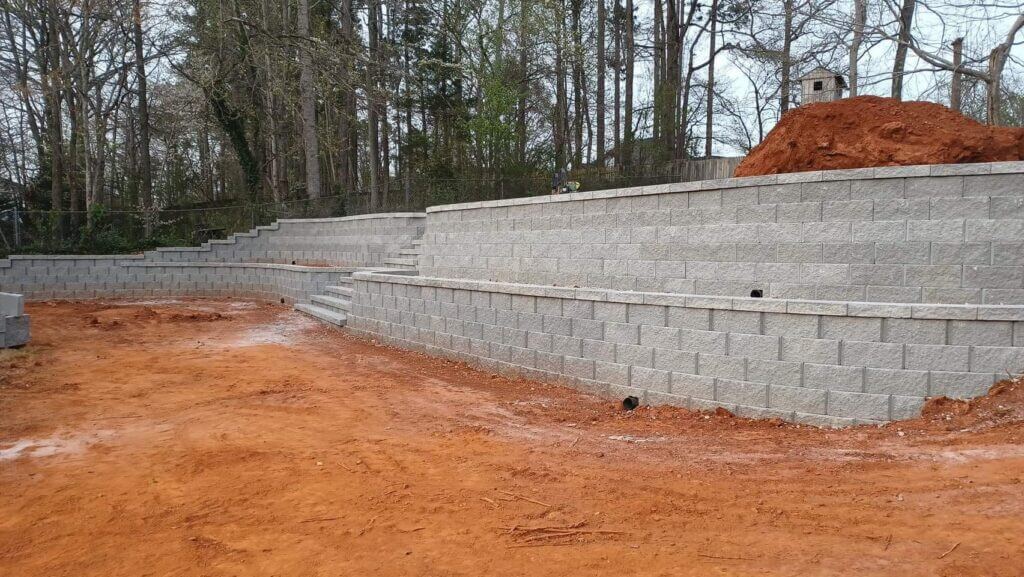
Retaining walls play a vital role in both residential and commercial landscaping, especially in areas like Atlanta, where varying topographies and frequent rainfall can cause soil erosion and landscape instability. Whether you’re looking to enhance your garden’s appearance or prevent soil from eroding, installing a retaining wall is an effective solution that offers both practical and aesthetic benefits.
In this blog, we’ll explore what retaining walls are, the different types, their benefits, and why they are crucial for properties in Atlanta.
What Is a Retaining Wall?
A retaining wall is a structure designed to hold back soil and prevent erosion, often in areas with a significant slope. It’s typically used to create level spaces in hilly areas, prevent landslides, or simply enhance the aesthetic appeal of a property. Retaining walls are essential for managing water drainage, stabilizing uneven land, and ensuring the safety of landscaping features.
They can be built using a variety of materials, each offering different benefits depending on the project’s requirements, such as natural stone, concrete blocks, timber, or brick.
Benefits of Retaining Walls
- Prevent Soil Erosion
One of the primary reasons for installing a retaining wall is to combat soil erosion, which is common on sloped land or in areas with heavy rainfall. When soil is left unsupported, it can wash away with rain, leading to loss of land and damage to the landscape. A retaining wall holds the soil in place, providing a barrier that prevents erosion and helps maintain the integrity of the landscape. - Create Usable Space
Retaining walls are commonly used in landscaping to create flat, usable areas in sloped yards. Whether you’re looking to add a flower bed, patio, or lawn area, a retaining wall can transform uneven land into a usable and functional space. This is especially valuable in urban areas like Atlanta, where space can be limited. - Improve Water Drainage
A well-constructed retaining wall helps manage water flow, ensuring that rainwater doesn’t erode the soil or pool in unwanted areas. Proper drainage systems built into the wall help channel water away from the base of the structure, preventing water damage to your property. This is especially important in areas prone to flooding or heavy rainfall. - Enhance Aesthetic Appeal
Aside from their practical uses, retaining walls can significantly enhance the visual appeal of your landscape. They can be designed to complement your existing landscaping features, creating a more structured, polished look. A beautiful stone retaining wall can serve as a focal point in your garden, adding texture, color, and dimension to your yard. - Increase Property Value
Installing a retaining wall can boost the value of your property by improving its functionality and aesthetic appeal. Well-designed retaining walls make your landscape more usable, attractive, and safe, which can increase curb appeal and ultimately raise the market value of your home.
Types of Retaining Walls
- Gravity Walls
Gravity retaining walls rely on their mass to resist the pressure of the soil behind them. These walls are typically made of heavy materials like stone or concrete and don’t require additional reinforcement. They are ideal for smaller walls that don’t need to withstand extreme pressures but can be effective for residential landscaping. - Cantilevered Walls
Cantilevered retaining walls are designed with a “L” shape, where part of the wall extends backward into the soil. These walls use the force of the soil itself to resist pressure, providing a more efficient design for taller structures. They are often used for commercial projects or larger residential landscapes. - Counterfort Walls
Counterfort retaining walls are similar to cantilevered walls, but they feature additional reinforcements or counterforts, which are vertical supports that reduce the amount of material needed in the wall. These are typically used for taller retaining walls that need additional support to prevent soil movement. - Sheet Pile Walls
Sheet pile retaining walls are commonly used in areas where space is limited. These walls are made from interlocking steel or vinyl sheets driven into the ground. They are ideal for environments with softer soil and are often used for waterfront properties or areas with limited space for larger, bulkier walls. - Boulder or Stone Walls
Natural stone or boulder walls are commonly used for their aesthetic appeal and strength. These walls are typically built by stacking large stones in a staggered pattern to create a rustic, natural look. While these walls are effective for preventing erosion and providing support, they require a high degree of craftsmanship and are best suited for smaller projects.
Installation of a Retaining Wall
- Planning and Design
The first step in building a retaining wall is proper planning and design. You need to assess the slope of the land, the type of material that will be used, and how much pressure the wall will need to resist. It’s also important to understand local zoning laws or regulations that may impact the construction of retaining walls. - Excavation and Foundation
Excavation is a critical step in building a retaining wall. You need to dig a trench for the base of the wall to ensure it has a solid foundation. The depth and width of the trench will depend on the type of retaining wall being built and the material used. It’s important to compact the soil to prevent future shifting. - Building the Wall
After the foundation is laid, the retaining wall can be constructed. For gravity walls, the material is stacked layer by layer, ensuring each layer is leveled and compacted. For cantilevered and counterfort walls, additional steps may be needed for reinforcement. - Backfilling and Drainage
Once the wall is built, the next step is backfilling with soil. It’s essential to leave space for proper drainage, which can be achieved by adding gravel or perforated pipes behind the wall. This allows water to flow freely, reducing pressure behind the wall and preventing potential damage. - Finishing Touches
After the retaining wall is completed, finishing touches like planting, mulching, or adding decorative elements can enhance its appearance. Landscaping plants and flowers around the wall can further improve its aesthetic appeal.
Why Choose Professional Retaining Wall Installation?
While DIY retaining wall installation may seem like an appealing option, professional installation ensures that the wall is designed and built properly. Here are some reasons why you should choose professional retaining wall installation:
- Expertise: Professional landscapers and contractors have the experience and knowledge to design and build a wall that meets structural requirements and local regulations.
- Quality Materials: Professionals use high-quality materials that are durable and designed to withstand the pressure of soil behind the wall.
- Time and Cost Efficiency: While hiring a professional may seem like an upfront investment, it can save you time, effort, and money in the long run by preventing mistakes or the need for costly repairs.
- Safety: Retaining walls that are improperly designed or built can collapse and cause significant damage to your property. Professionals ensure the wall is structurally sound and safe.
Retaining walls are essential for controlling soil erosion, creating usable spaces, improving drainage, and enhancing the appearance of your landscape. Whether you need a small garden wall or a large, complex structure, understanding the types of walls and the installation process is crucial. With professional help, you can ensure that your retaining wall serves both functional and aesthetic purposes, providing long-lasting benefits to your property.If you’re in the Atlanta area and need help with retaining wall installation, Southern Property Services offers expert landscaping solutions to meet your needs.